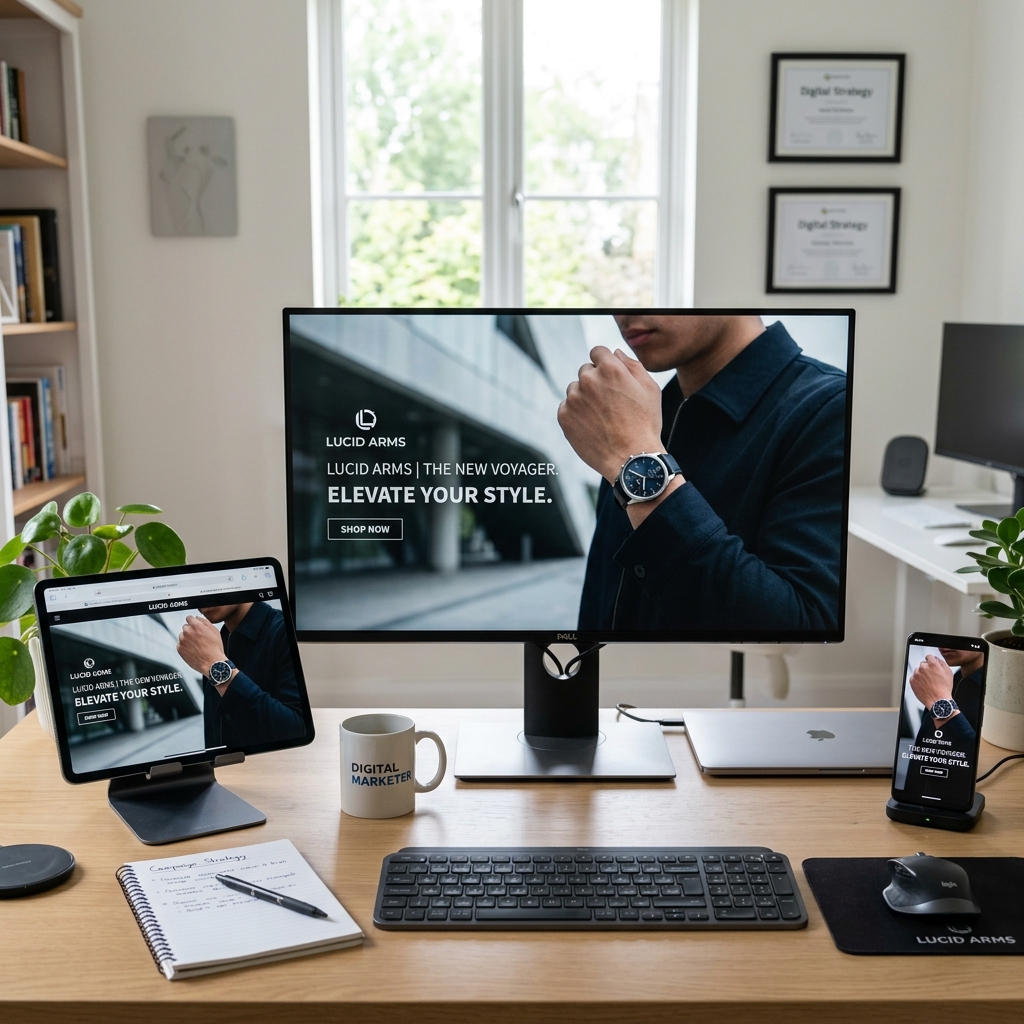
If you review the marketing strategy of the average mid-sized company today, you will likely find a collection of deeply siloed operations. The social media team runs their Instagram campaigns in total isolation. The email marketing manager blasts out newsletters without consulting the paid ads team. And the web development team updates the website copy without ever checking if it aligns with the messaging on the company's LinkedIn profile.
This fragmented, multi-channel approach worked moderately well a decade ago. Today, it is a recipe for massive customer friction and wildly inefficient ad spend.
We have officially entered the era of true Omnichannel Marketing. Modern consumers do not view your brand as a collection of separate channels; they view it as a single, unified entity. They expect their experience to be perfectly continuous, whether they are interacting with your brand via a TikTok ad, a personalized email, a physical storefront, or a chatbot on your website.
In this comprehensive guide, we will explore exactly what omnichannel marketing means in 2026, why it is the only viable strategy for scaling revenue, and how your business can architect a perfectly seamless customer journey.
The Critical Difference: Multi-Channel vs. Omnichannel
To understand the power of this strategy, we must clearly define the difference between "multi-channel" and "omnichannel," as the terms are frequently (and incorrectly) used interchangeably.
Multi-channel marketing simply means your brand exists on multiple platforms. You have a website, a Facebook page, a YouTube channel, and an email list. However, in a multi-channel setup, these platforms operate independently. The customer journey is fractured. If a customer adds an item to their cart on your website but leaves, your Facebook page doesn't know about it, and your email system might blindly send them a generic newsletter instead of a targeted cart-recovery discount.
Omnichannel marketing, conversely, places the customer at the exact center of a fully integrated, synchronized digital ecosystem. Every single channel is connected, sharing data in real-time, and updating the messaging dynamically based on the user's last interaction. The channels do not just exist; they actively cooperate to move the user down the funnel.
Why Omnichannel is Non-Negotiable in 2026
The shift to omnichannel is not merely a trendy buzzword; it is a fundamental requirement dictated by changing consumer psychology and the overwhelming noise of the digital landscape.
Here is why your business must adopt this architecture immediately:
1. The Non-Linear Customer Journey
The traditional marketing funnel (Awareness -> Consideration -> Decision) implies a straight, predictable path. This is a complete myth.The modern B2B or B2C buyer's journey is chaotic and non-linear. A prospect might discover your brand via a LinkedIn post on their phone during a commute. Three days later, they might Google your brand name on their work laptop, read a blog post, and leave. Two weeks later, they might click a retargeting ad on Instagram, finally sign up for your email list, and eventually convert after receiving a personalized email sequence.
If your channels are not communicating, you cannot accurately track, attribute, or optimize this complex, multi-device journey. You will likely misattribute the sale entirely to the final email, ignoring the crucial awareness generated by the initial LinkedIn post.
2. Exponentially Higher Conversion Rates and LTV
Data consistently proves that campaigns integrating three or more synchronized channels drastically outperform single-channel or siloed campaigns. Omnichannel campaigns boast engagement rates that are nearly 250% higher, and customer retention rates are significantly stronger.When a customer receives a perfectly consistent, highly relevant message everywhere they look, it drastically accelerates the "Know, Like, and Trust" factor. It makes your brand feel omnipresent and highly attentive to their specific needs. This leads not only to a higher initial conversion rate but a significantly higher Customer Lifetime Value (LTV).
3. Eradicating Customer Friction
Friction is the ultimate enemy of revenue. If a customer complains to your support team via X (formerly Twitter), and then calls your customer service line the next day, they expect the phone representative to already know about the Twitter conversation.If they have to repeat their problem, friction occurs, and brand loyalty dissolves. Omnichannel infrastructure ensures that every department (Sales, Marketing, Customer Success) has access to a unified, centralized view of the customer's entire interaction history.
Architecting a Seamless Omnichannel Ecosystem
Transitioning from a siloed marketing approach to a fully integrated omnichannel machine requires sophisticated technology and a complete breakdown of internal company silos. Here is how Bykorp engineers this infrastructure for our clients:
Phase 1: Centralized Data Infrastructure (The CDP)
You cannot execute an omnichannel strategy if your data is scattered across five different software platforms. The foundational step is implementing a powerful Customer Data Platform (CDP) or an advanced CRM (like HubSpot or Salesforce).This platform serves as the ultimate "source of truth." It ingests data from every touchpoint—website visits, email opens, ad clicks, social interactions, and offline sales—and stitches it together to create a single, comprehensive, and continuously updated profile for every individual prospect and customer.
Phase 2: Dynamic Audience Segmentation
Once the data is centralized, you must segment your audience dynamically. Static lists (e.g., "All Newsletter Subscribers") are useless.We build dynamic lists that update in real-time based on user behavior. For example, a segment might be: *"Users who viewed the 'Enterprise Pricing' page twice in the last 7 days, opened the last email, but have not booked a demo."* Because this list is dynamic, a user automatically falls into it when they meet the criteria and falls out of it the moment they convert.
Phase 3: Automated, Trigger-Based Workflows
This is where the magic happens. Using the dynamic segments, we build sophisticated, multi-channel automation workflows.- If a user enters the "High Intent, Unconverted" segment described above, the system automatically triggers a synchronized response across all channels:
- •Email: They receive a highly personalized, text-only email from a sales rep offering a quick consultation.
- •Paid Ads: Their device is added to a specific retargeting audience on LinkedIn, showing them a video testimonial from a current enterprise client.
- •Website Experience: The next time they visit your homepage, the standard hero image is dynamically swapped out for a tailored message focusing on enterprise solutions.
Every channel is pushing the exact same, highly relevant narrative simultaneously.
The Bykorp Omnichannel Audit
Building a true omnichannel experience is complex. It requires deep technical expertise in data integration, marketing automation, high-level strategic planning, and flawless creative execution.
If your marketing channels feel disjointed, if your brand messaging is inconsistent, or if you are struggling to accurately track the ROI of your complex customer journeys, you need to tear down your silos.
At Bykorp, we specialize in auditing fragmented marketing operations and rebuilding them into synchronized, revenue-generating omnichannel machines. We handle the data integration, the workflow automation, and the creative strategy required to make your brand feel truly seamless and omnipresent.
Contact Bykorp today to schedule an omnichannel architecture review and start delivering the flawless digital experience your modern customers demand.
Ready to grow with Bykorp?
Let's discuss how Bykorp can help your business thrive in the digital age.
Contact Bykorp